

Summarize with AI


Tencent unveiled Hyra 2.0, an autonomous research agent designed to conduct end-to-end scientific and machine learning experimentation with persistent cross-task tool accumulation.
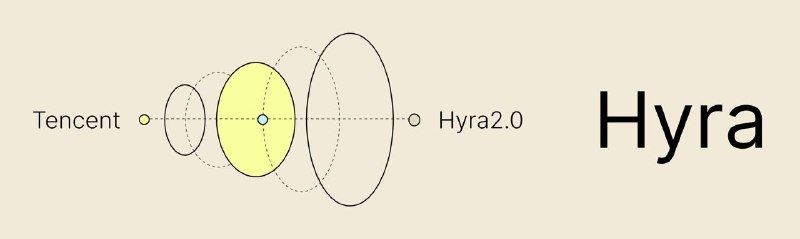
The first iteration of Hyra operated on a linear loop: formulate a hypothesis, execute an experiment, evaluate metrics, and feed results into the next iteration. Hyra 2.0 expands this framework by retaining intermediate artifacts, custom tools, and experimental pipelines developed during problem solving.
What it is
- Cumulative tool synthesis. When optimizing model training, the agent can engineer specialized hyperparameter search strategies or candidate pruning heuristics and persist them to a shared library for future research runs.
- Cross-session knowledge transfer. Unlike traditional AutoResearch setups that discard context once an allocated compute budget finishes, Hyra 2.0 builds a growing repository of modular research utilities.
- Automated experimental pipelines. The system orchestrates environment setup, code generation, execution monitoring, and statistical validation without human intervention.
- Iterative metric evaluation. Failed experiment branches are logged with causal diagnoses, preventing the agent from re-testing unproductive research paths.
Feature comparison
| Feature | Hyra 1.0 / Standard AutoResearch | Hyra 2.0 |
|---|---|---|
| Optimization Scope | Single task within compute budget | Multi-task continuous learning |
| Tool Persistence | Discarded after run | Saved in modular tool repository |
| Pipeline Reuse | Manual re-specification | Automated cross-task loading |
| Error Diagnosis | Basic log review | Structured causal post-mortems |
Sources
Did this land? Leave a reaction.
Discussion
0 commentsMembers can join the discussion
Become a member to comment and reply to other members.
Become a MemberNo comments yet
Be the first to start the discussion.