


Summarize with AI


OpenAI introduced Control Room, a centralized compute management architecture designed to instantly halt token generation across frontier model workloads when safety boundaries are breached.
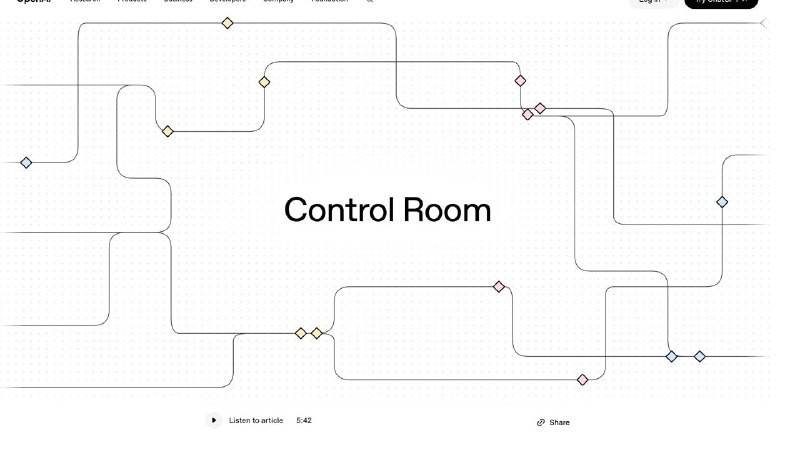
The system oversees OpenAI's entire research infrastructure, governing pre-training runs, post-training evaluations, autonomous agent swarms, and synthetic data generation pipelines. Every computational task is assigned a unique job_id bound to an approved Safety Case. Prior to generating new tokens, the inference engine polls Control Room to confirm that runtime authorization remains valid.
When a safety researcher or automated monitoring daemon revokes permissions, subsequent token generation calls are rejected immediately. While underlying GPU clusters remain active, model output ceases entirely. System-wide shutdowns propagate within a maximum of 35 seconds due to authorization caching across distributed clusters, with plans to reduce latency toward zero.
Control Room operates under a strict fail-closed design philosophy. If the central control service experiences outages or network partition, inference engines automatically reject generation requests until cluster connectivity is reestablished. Automated compliance scanners continually inspect the compute fabric to identify rogue inference engines attempting to bypass Control Room checks.
What it is
- Centralized safety switch. Manages authorization across training runs, evaluations, and autonomous agent instances.
- Inference token gating. Requires inference engines to validate runtime permits against unique job IDs before serving tokens.
- 35-second shutdown ceiling. Halts token generation across distributed infrastructure in under 35 seconds, with near-zero latency targeted.
- Fail-closed reliability. Outages or disconnections automatically block model generation across all client tasks.
- Automated enforcement scans. Detects unmonitored compute instances or services attempting to bypass authorization checkpoints.
Control Room architecture
| Component | Function | Failure Behavior |
|---|---|---|
| Authorization Registry | Maps job_id to active Safety Case approvals | Denies new generation requests |
| Inference Token Gate | Validates generation tickets before token emission | Rejects generation on permit revocation |
| Watchdog Evaluators | Secondary models monitoring agent trajectory drifts | Triggers automated revocation |
| Bypassing Detection | Scans GPU compute fabric for rogue unlinked engines | Flags and isolates unauthorized pods |
Sources
Did this land? Leave a reaction.
Discussion
0 commentsMembers can join the discussion
Become a member to comment and reply to other members.
Become a MemberNo comments yet
Be the first to start the discussion.